Teanga
Helical springs are among the most trusted mechanical components in engineering. In short, a helical spring is a wire coil that absorbs energy when compressed, extended, or twisted, then releases that energy when the load is removed. That simple behavior supports suspension systems, valve trains, medical instruments, and heavy machinery across nearly every industry. Yet the real-world reliability of a helical spring depends on three things: design accuracy, material quality, and the precision of the machine that forms the wire . That is why engineers and buyers now look beyond the spring itself and ask how it is manufactured.
What Is a Helical Spring?
A helical spring is a spiral wound wire with a constant coil diameter and uniform pitch. The term covers several common forms: compression springs, which shorten under load; extension springs, which stretch under load; and torsion springs, which resist rotation. The helix shape gives the spring a predictable rate of deflection, allowing it to store a defined amount of energy.
The engineering value of a helical spring comes from its ability to return to its original shape after the load is removed. That is called elastic recovery, and it depends on the material's yield strength, the wire diameter, and the coil geometry. If any of these factors drift outside specification, the spring will sag, crack, or lose force.
How helical springs store energy
When a force acts on a spring, the wire is subjected to shear stress and bending. For compression springs, the main stress is torsional shear in the wire. For torsion springs, the dominant stress is bending. The spring index and the number of active coils determine how much strain the spring can accept without permanent deformation.
Key Design Parameters and Engineering Data
To communicate spring requirements clearly, you need the same design language used by spring engineers. Two numbers matter more than almost any other: spring index and spring rate .
Spring index and spring rate
Spring index (C) is the ratio of the mean coil diameter to the wire diameter (C = D / d). For practical helical springs, C is usually between 3 and 12. According to the Roy Mech engineering reference, most steel springs stay in this range. A low index creates a stiff spring with tight curvature, while a high index gives a more flexible coil. Spring rate (k) is the force needed to deflect the spring one unit of length, expressed as k = F / δ. In compression springs, increasing the number of active coils reduces the spring rate.
Stress and fatigue limits
The wire in a helical spring experiences maximum shear stress on the inner surface of the coil. According to the Roy Mech helical spring reference, for general-purpose springs a maximum stress value of about 40% of the material's tensile strength is often used. For dynamic applications, the fatigue life depends on stress amplitude, surface finish, and the presence of residual compressive stress from shot peening.
| Symbol | Parameter | Typical unit |
|---|---|---|
| d | Wire diameter | mm |
| D | Mean coil diameter | mm |
| C | Spring index (D/d) | dimensionless |
| k | Spring rate | N/mm |
| G | Modulus of rigidity | MPa |
| n | Number of active coils | dimensionless |
| τmax | Maximum shear stress | MPa |
Values in Table 1 follow the notation used in the Roy Mech helical spring design guide. That reference also provides the stress formulas and application notes used by many practicing engineers.
Common Types of Helical Springs and Their Applications
Helical springs are used in almost every market you can name, because the geometry can be tuned to different loads, spaces, and movement patterns. The main types include:
- Compression springs – absorb axial force and return to free length. Common in suspension systems, valve springs, and safety valves.
- Extension springs – work under tension and store energy when pulled apart. Often used in garage doors, trampolines, and cable assemblies.
- Torsion springs – resist angular deflection and store energy as the arms rotate. Used in clothespins, hinges, and control mechanisms.
- Conical springs – gradually reduce coil diameter to save compressed height. Ideal for applications where solid height matters.
For buyers and design engineers, the main application areas are easy to identify. In the automotive industry, helical springs appear in automotive and mobility spring applications such as suspension and clutch systems. In medical devices, precision compression springs are used in surgical instruments and drug delivery systems; you can compare requirements in the medical industry spring requirements . Similar demands exist in aerospace, construction, and electrical engineering.
How Helical Springs Are Manufactured
Producing a reliable helical spring requires more than wrapping wire around a rod. Modern manufacturing uses a sequence of controlled operations, and each step affects the final load, geometry, and fatigue life.
- Wire feeding and straightening – The wire is pulled from a coil, straightened, and guided into the forming area. Any bend in the wire will show up as a pitch error in the finished spring.
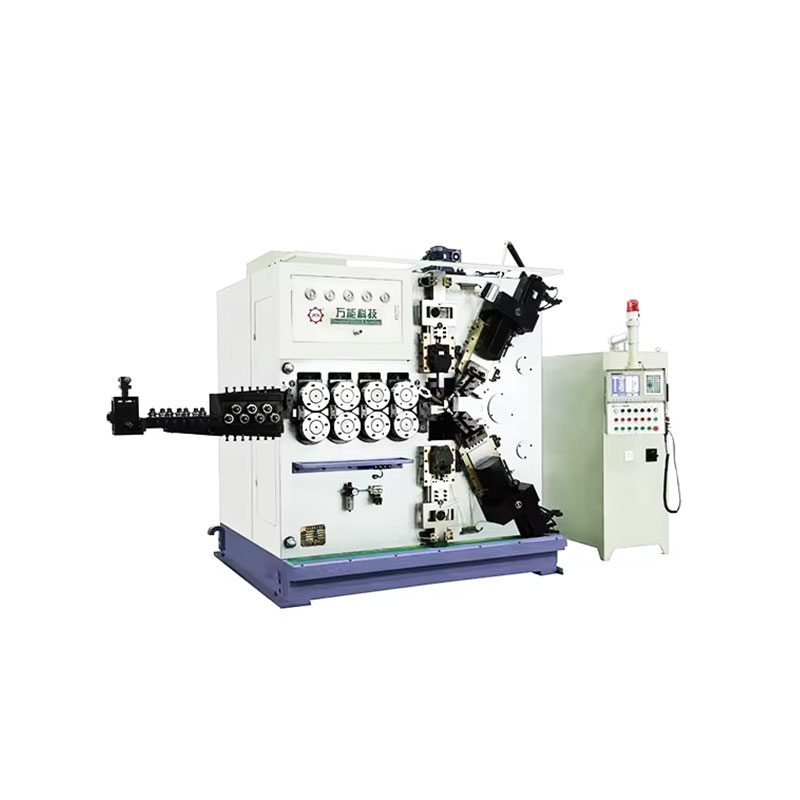
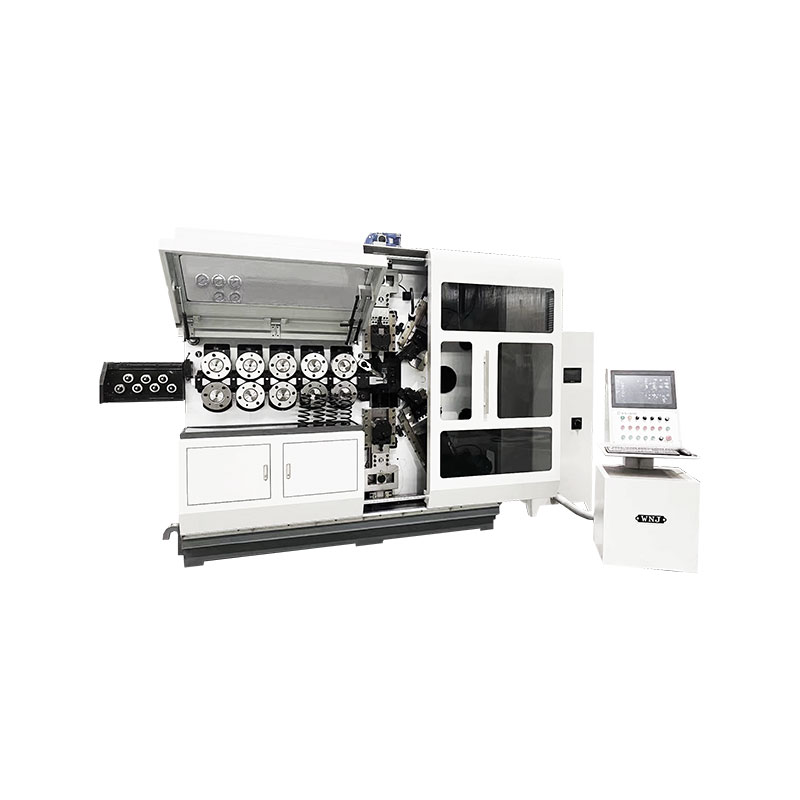
- Coiling – The wire is fed around a mandrel while the machine controls pitch and diameter. A 3-axis CNC spring coiling machine
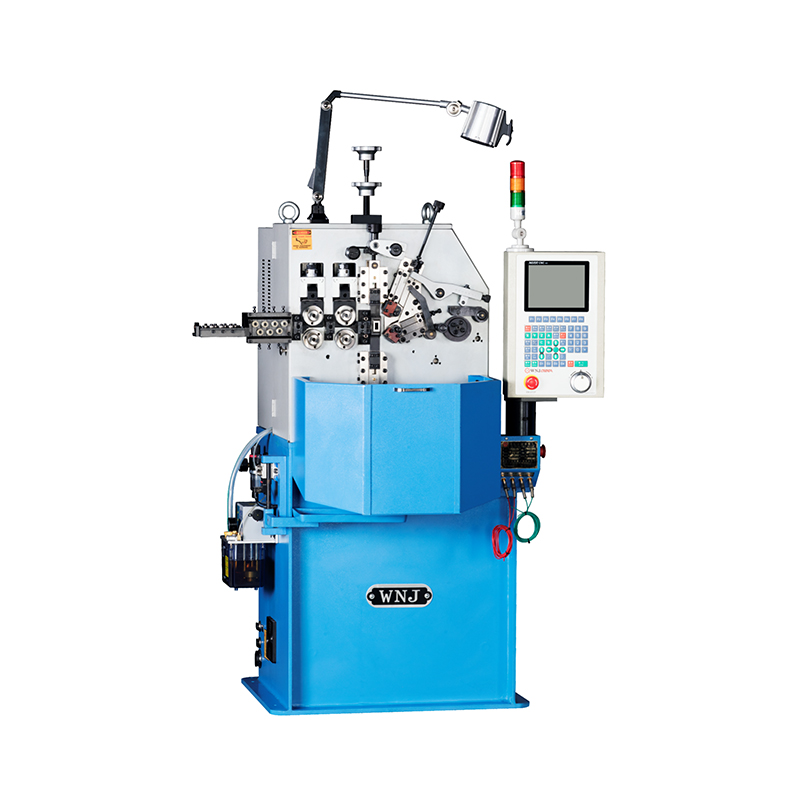 Custom TK-320B 3AXES CNC SPRING COILING MACHINE Factory, Comapny - WNJ Machine Zhejiang Omnipotent Spring Machine Co.,ltd ( WNJ Machine ) is a China Wholesale TK-320B 3AXES CNC SPRING COILING MACHINE factory and comp... View Product → can hold consistent coil spacing and deliver compression springs with minimal trial runs.
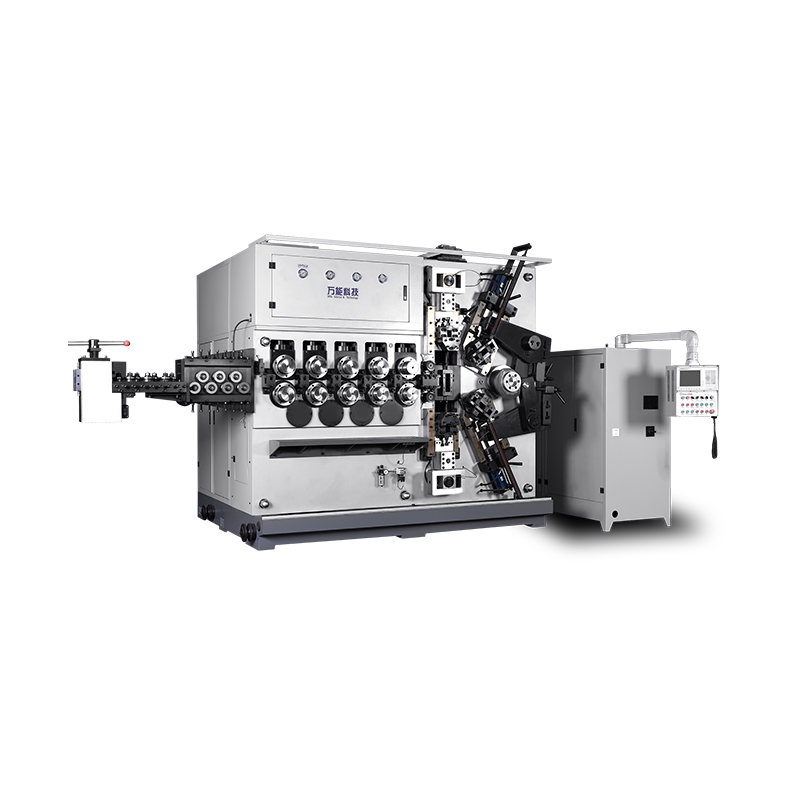
 - Forming – For torsion springs or variable-pitch springs, a multi-axis forming machine bends the ends and adjusts the coil shape. Many manufacturers use a 5-axis CNC spring forming machine
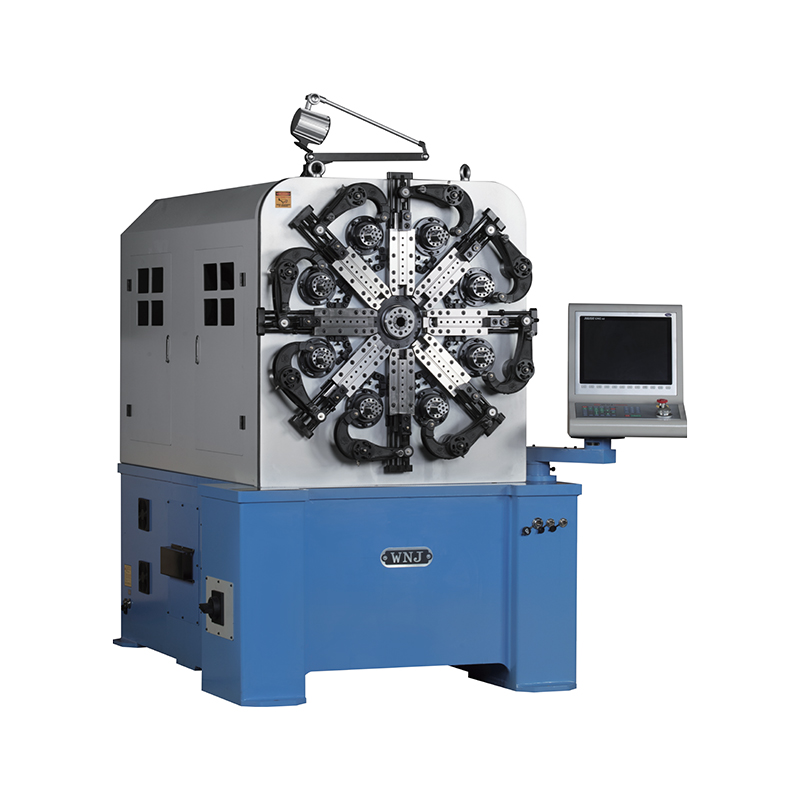 Custom CNC-635Z 5AXES CNC SPRING FORMING MACHINE Factory, Comapny - WNJ Machine Zhejiang Omnipotent Spring Machine Co.,ltd ( WNJ Machine ) is a China Wholesale CNC-635Z 5AXES CNC SPRING FORMING MACHINE factory and com... View Product → for this task because it adds the flexibility of servo-controlled tool movement.
 - End grinding – Compression springs often need flat, square ends so they seat evenly against mating surfaces. A CNC spring grinding machine removes material from the ends while holding parallel tolerance.
- Heat treatment – Tempering relieves internal stress and stabilizes the spring's dimensions and elastic limit.
- Surface finishing and inspection – Shot peening, plating, and 100% dimensional checks reduce surface defects and verify free length, outside diameter, and load at specified heights.
Material Selection for Helical Springs
Material choice affects corrosion resistance, fatigue life, heat tolerance, and cost. Most helical springs are made from round wire, and the most common materials include the following.
| Material | Typical tensile strength (MPa) | Good corrosion resistance | Common applications |
|---|---|---|---|
| Music wire (ASTM A228) | 2300-2600 | No | Small precision springs |
| Oil-tempered wire (ASTM A229) | 1600-2100 | No | General industrial springs |
| Chrome silicon (ASTM A401) | 1800-2200 | No | High-stress dynamic springs |
| Stainless steel 302/304 | 1400-1900 | Yes | Food and medical equipment |
| Phosphor bronze | 600-1000 | Yes | Electrical contacts |
The exact tensile strength depends on wire diameter and heat treatment, but the ranges in Table 2 give a practical starting point. For high-stress dynamic springs, chrome silicon steel is popular because it retains strength at higher temperatures and supports longer fatigue life. Stainless steel is the preferred choice for food equipment, surgical tools, and outdoor mechanisms. Phosphor bronze is used in electrical contacts where non-magnetic and conductive properties are needed.
How to Choose a Helical Spring or a Spring Manufacturing Partner
When you review a helical spring for a new design, the first thing is to list the load conditions, not just the free length and wire diameter. Start with these questions:
- What load is required at operating height?
- What is the maximum deflection before the coil reaches solid height?
- What is the operating temperature range?
- How many cycles should the spring survive?
- Is there a requirement for coating, shot peening, or non-magnetic material?
After you define these values, talk to either a contract spring manufacturer or a spring machine builder. A practical way to evaluate a partner is to ask about their CNC coiling capability, the number of axes on their forming machines, and the quality-control steps they use. If you are at the early stage of a project, you can contact our spring engineering team with your specification and receive a feasibility assessment.
Common Manufacturing Defects in Helical Springs
Few springs fail because the material is wrong. Most failures start with subtle manufacturing defects that turn into cracks or dimensional drift. Understanding these defects helps you avoid them in your process.
Surface and material defects
Wire with micro-cracks, seams, or inclusions can break under cyclic loading. Shot peening helps close surface defects and creates compressive stress that improves fatigue life, but the base wire must be reasonably clean.
Dimensional and shape deviations
Changes in wire tension, tool wear, and ambient temperature cause the pitch and diameter to drift. The most visible problem is uneven end faces on compression springs. A CNC spring grinding machine solves this by holding end face parallelism within tight limits and producing stable seating surfaces.
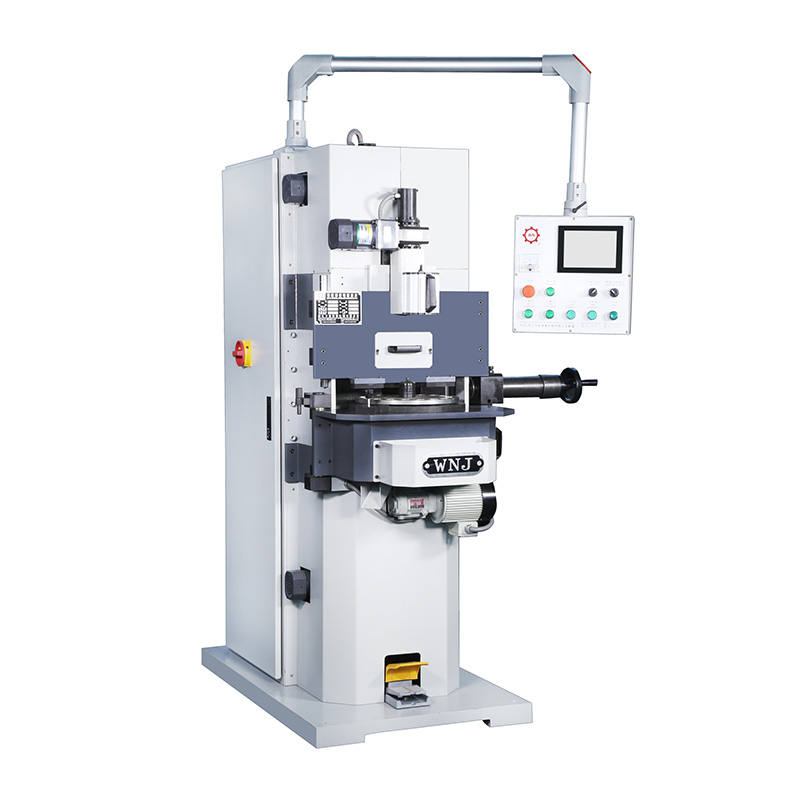 CNC Spring Grinding Machine Manufacturers, OEM/ODM Suppliers - WNJ Machine As a China OEM/ODM CNC Spring Grinding Machine Manufacturers and Spring Grinding Machine Suppliers,Omnipotent Spring Machine Co.,ltd offe... View Product →
 Heat treatment issues
If the spring is not tempered long enough, it stays brittle and may crack during installation. If the tempering temperature is too high, the material loses strength. Modern temper furnaces use controlled convection to keep temperature uniformity across the load, which reduces both problems.
Maintenance and Quality Assurance in Helical Spring Production
For production environments, helical spring consistency depends on maintenance of the forming equipment and the inspection equipment around it. A cleaning schedule is as important as the machining parameters.
- Clean wire guides and feed wheels every shift to prevent debris from scratching the wire.
- Calibrate servo axes monthly to keep feeding length and pitch accurate.
- Check tool holders and bending pins for wear before every production run.
- Monitor furnace temperature every cycle; a deviation of 10 degrees Celsius above or below the set point can change spring load by a noticeable amount.
Beyond maintenance, a complete quality-assurance workflow includes checking free length, outside diameter, and load at specified heights. For critical parts, sample testing with fatigue cycling and micro-hardness checks adds an extra layer of confidence.
Frequently Asked Questions
What is a helical spring?
A helical spring is a coiled wire component that stores mechanical energy when compressed, extended, or twisted. The helical shape gives it a predictable elastic response, allowing the spring to return to its original dimensions after the load is removed.
Is a helical spring the same as a coil spring?
In most engineering conversations, yes. The term coil spring is often used for compression springs in vehicle suspensions, while helical spring is the broader term covering compression, extension, and torsion springs. Both share the same basic geometry.
How do you calculate the spring rate of a helical spring?
Spring rate (k) is the force divided by the deflection (F/δ). For a compression spring, the rate is also influenced by wire diameter, mean coil diameter, number of active coils, and the shear modulus of the material.
Which material is best for a helical spring?
There is no universal best material. Music wire offers high strength, stainless steel resists corrosion, chrome silicon handles high dynamic stresses, and phosphor bronze suits electrical and non-magnetic applications. Select material based on the operating environment, required fatigue life, and cost.
Can CNC spring machines manufacture custom helical springs consistently?
Yes. CNC coiling and forming machines use servo-controlled axes to set wire feed length, coil diameter, pitch, and end geometry. Once the program is locked, they can repeat the same spring across long runs with small variation.
Conclusion
Helical springs may look simple, but reliable performance comes from the intersection of good design, correct material, and precise manufacturing. Start by defining spring index, spring rate, stress limits, and acceptable fatigue life. Then choose wire material that matches the environment. Finally, align yourself with a manufacturing partner that understands CNC coiling, forming, grinding, and tempering as a continuous process.
If you are evaluating new spring equipment or planning a custom spring design, compare machine capability rather than price alone. The number of axes, the rigidity of the tooling, and the quality-control approach will decide whether your springs hold their load for thousands or millions of cycles .